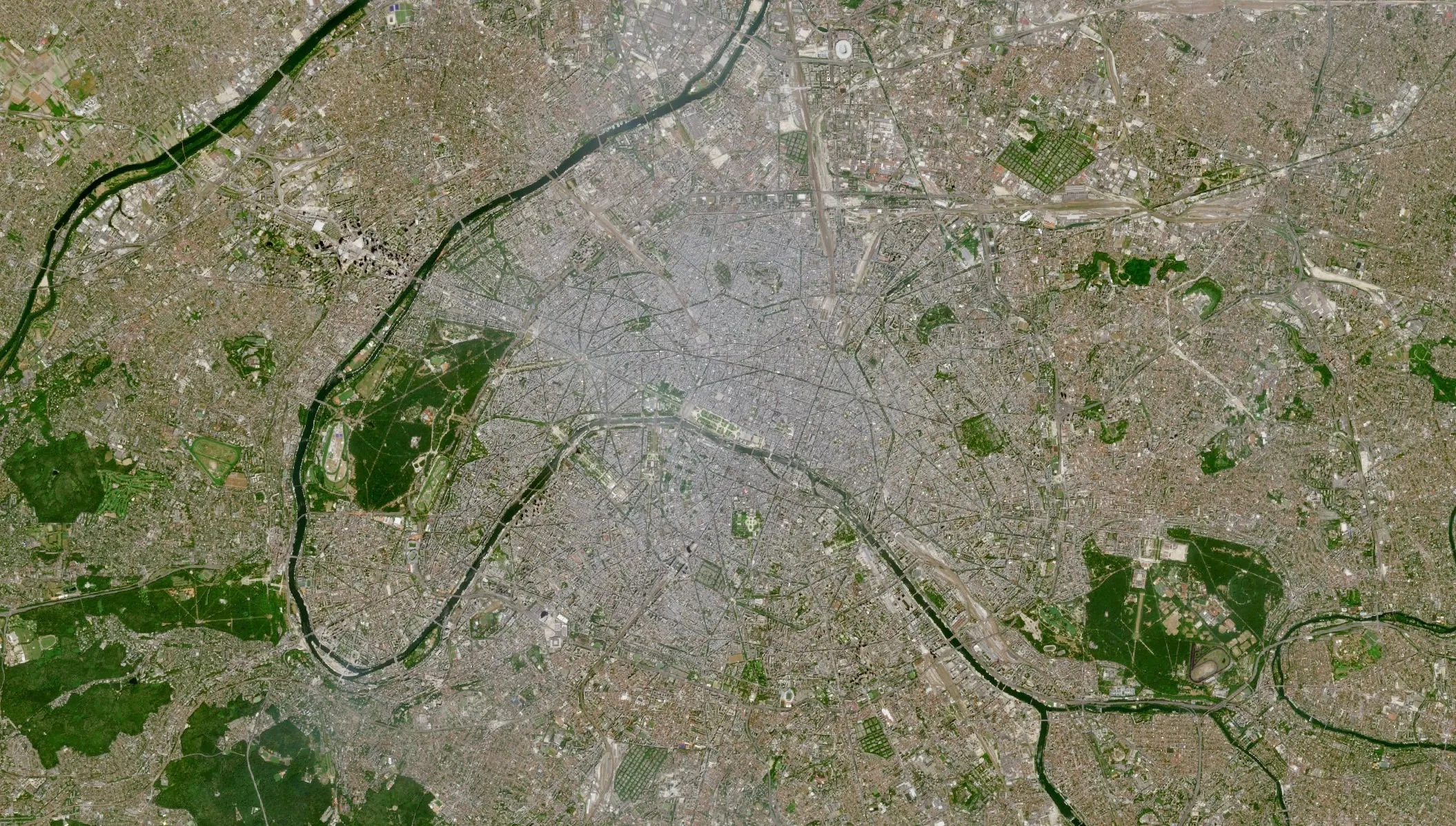
NeurIPS 2026 · Paris, France · Dec 12 / 13
2nd Workshop on Advances in Representation Learning for Earth Observation
Bringing together machine learning, computer vision, and Earth sciences to advance robust, interpretable, and scalable models for monitoring and predicting our planet.
About REO
A forum for representation learning in Earth Observation
The second edition of the Representation Learning for Earth Observation (REO) workshop brings together researchers and practitioners from machine learning, computer vision, and Earth sciences. With the growing availability of large-scale, multimodal EO data and the rise of powerful foundation models, new opportunities emerge for integrating data-driven approaches across sensing modalities and application domains.
REO provides a venue for novel technical methods, scientific applications, and system-level innovations — fostering exchange between academia and industry, and policy stakeholders.
Call for Papers
Topics of Interest
We invite contributions spanning technical methods, scientific applications, and system-level innovations across EO, environmental monitoring, and related Earth sciences.
Machine Learning for EO
Domain-adaptive models; continual and online learning; multi-modal fusion; human-in-the-loop and active learning strategies.
EO Foundation Models
Training paradigms, evaluation and interpretability, uncertainty quantification, and causal modeling for EO foundation models.
Earth Embeddings
Encodings for efficient storage, retrieval, and search in large EO archives; semantic compression for scalable analysis.
Physics-based & Hybrid Modeling
Integration of Radiative Transfer Models and other physical simulators into ML pipelines; hybrid AI–physics parameter retrieval.
Earth Science & Ecology Applications
Geophysical parameter estimation, urban and rural mapping, weather/climate forecasting, biodiversity, soil and vegetation.
Data, Benchmarks & Accessibility
Multimodal data handling, cross-sensor harmonization, representative datasets, bias mitigation, open benchmarks.
Research Track
Non-archival short papers of up to 4 pages presenting novel research, preliminary results, new datasets, benchmarks, or emerging ideas. Double-blind peer review. No formal proceedings.
Highlights Track
Papers published after NeurIPS 2025 at major ML/CV venues, relevant to EO and geospatial AI. Submit the published paper with a short summary (max one page) explaining its relevance. Single-blind review.
Submission Details
Show
Formatting
Submissions must follow the NeurIPS formatting guidelines, with the exception of the page limit: up to 4 pages for the Research Track and up to 1 page for the Highlights Track summary (references and appendices excluded). The checklist is not required for any track. Please use the official NeurIPS LaTeX template. Submissions not following the official template risk a desk rejection.
When using the template, please adjust the following:
- Set the workshop title:
\workshoptitle{2nd Workshop on Advances in Representation Learning for Earth Observation} - For a Research Track submission (novel work), uncomment the double-blind reviewing option ("6. Workshop with double-blind reviewing"):
\usepackage[dblblindworkshop]{neurips_2026} - For a Highlights Track submission (published work), uncomment the single-blind reviewing option ("5. Workshop with single-blind reviewing"):
\usepackage[sglblindworkshop]{neurips_2026} - For the camera-ready paper, uncomment the final option, e.g.
\usepackage[dblblindworkshop, final]{neurips_2026} - Remove the checklist for any submission:
\newpage\input{checklist.tex}
Anonymity
Research Track submissions are reviewed double-blind: remove author names, affiliations, acknowledgements, and any identifying links or metadata from the PDF. Non-anonymized submissions risk a desk rejection. Highlights Track submissions are reviewed single-blind and need not be anonymized.
Dual Submissions
REO-2 is non-archival, so concurrent submission to archival venues is permitted from our side, in line with the NeurIPS 2026 dual submission policy. Please do not submit the same work to multiple NeurIPS 2026 workshops. Upon request, we do not publish accepted papers online if this would hinder a submission to an archival venue.
Use of LLMs
We follow the NeurIPS 2026 LLM policy. Disclose LLM or agent use where it is an important, original, or non-standard component of the approach; routine editing and basic code assistance need not be disclosed. LLMs cannot be authors, and authors remain fully responsible for the correctness and originality of their submission, including all citations.
Registration & Code of Conduct
Presentation is in person, so at least one author of each accepted paper needs to attend the workshop in Paris. All participants are bound by the NeurIPS Code of Conduct.
Volunteer Reviewers
We welcome volunteer reviewers. If you would like to review for REO-2, please email loic.landrieu@enpc.fr.
Important Dates
| Milestone | Date (AoE) |
|---|---|
| Submission portal opens | Aug 1, 2026 |
| Submission deadline | Sep 2, 2026 |
| Notification | Sep 29, 2026 |
| Camera-ready | Oct 29, 2026 |
| Workshop day | Dec 12 / 13, 2026 — Paris |
In-person presentation is required. The best papers will be selected for oral presentations.
Invited Speakers
Keynotes
Five speakers representing the diversity of the EO community — spanning academia, industry, ML, and Earth sciences.
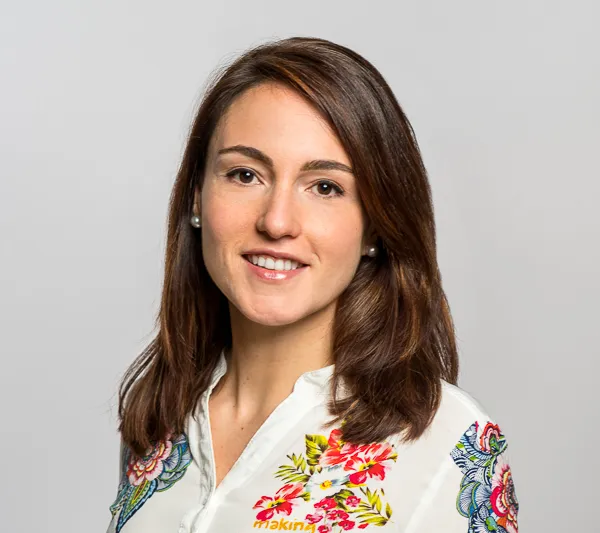
Laura Leal-Taixé
NVIDIA / U. Toronto
Senior Research Manager leading the Dynamic Vision and Learning group as well as Adjunct Professor at the University of Toronto, working on visual AI.
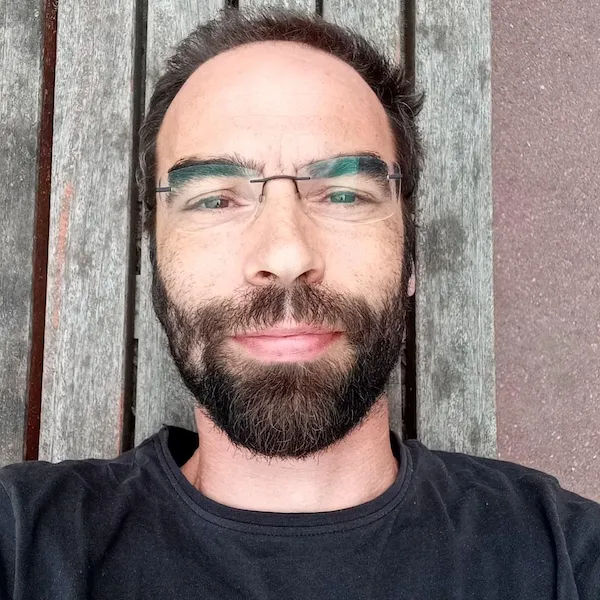
Nuno Carvalhais
Max Planck Institute for Biogeochemistry
Group Leader and ELLIS Scholar in Machine Learning for Earth and Climate Science. Works on terrestrial ecosystem dynamics, biogeochemical cycles, and climate–biosphere interactions.
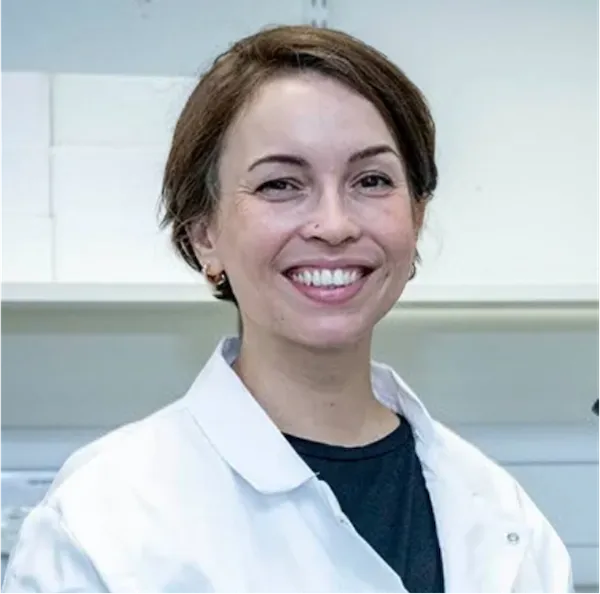
Jacqueline Campbell
Asterisk Labs
Schmidt Science Fellow and co-founder at Asterisk Labs. Studies cloud properties in overlooked satellite imagery and AI tooling for accessible Earth-scale environmental data.
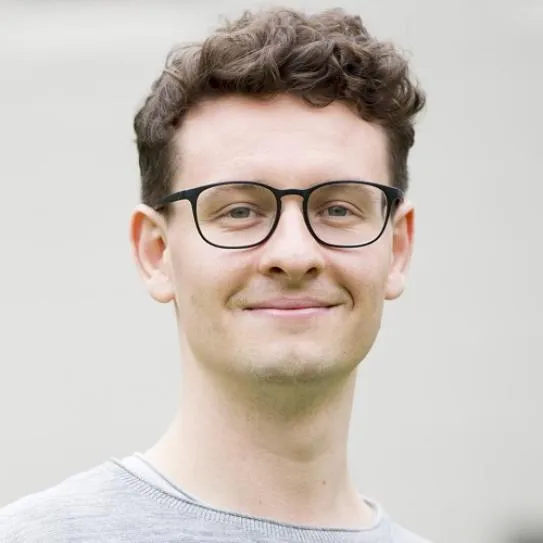
Konstantin Klemmer
LGND AI / UCL (incoming)
Machine learning researcher at LGND AI and incoming Assistant Professor at UCL. Works on geospatial foundation models, self-supervised learning, and location embeddings.
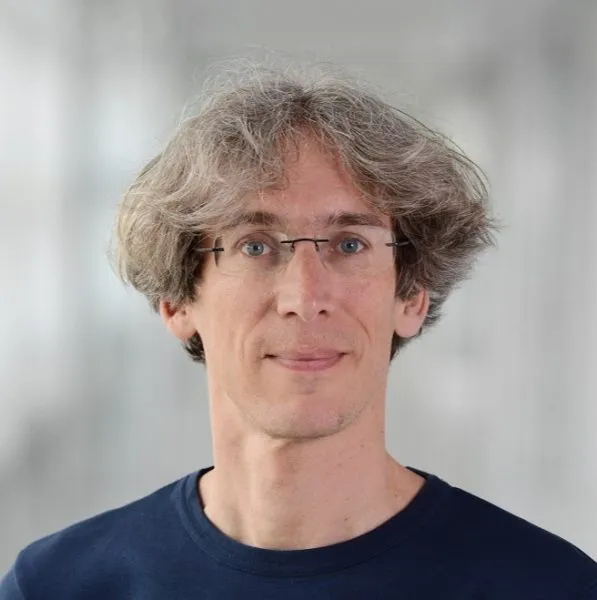
Konrad Schindler
ETH Zürich
Professor of Photogrammetry and Remote Sensing at ETH Zürich. His research interests lie in the field of visual AI, with a focus on remote sensing and 3D computer vision.
Program
Provisional Schedule*
Keynotes, orals, two poster sessions, and a panel – 100% of talks in person.
Morning
- 09:00 – 09:15 Welcome
- 09:15 – 09:45 Keynote 1 — Laura Leal-Taixé
- 09:45 – 10:15 Keynote 2 — Nuno Carvalhais
- 10:15 – 10:45 Keynote 3 — Jacqueline Campbell
- 10:45 – 11:00 Coffee Break
- 11:00 – 11:30 Oral Presentations
- 11:30 – 12:30 Poster Session 1
- 12:30 – 13:30 Lunch Break
Afternoon
- 13:30 – 14:00 Keynote 4 — Konstantin Klemmer
- 14:00 – 14:30 Keynote 5 — Konrad Schindler
- 14:30 – 15:30 Poster Session 2
- 15:30 – 16:00 Coffee Break
- 16:00 – 17:00 Panel Discussion & Q&A
- 17:00 – 17:15 Closing Remarks
*The program is still being finalized and may change – please check back closer to the workshop day.
Organizers
Loïc Landrieu
ENPC (IMAGINE / LIGM), IGN–LASTIG
Nico Lang
University of Copenhagen, Pioneer Centre for AI
Benedikt Blumenstiel
IBM Research / ETH Zürich
Ruben Cartuyvels
ESA Φ-lab, Earth System Science Hub
Nikolaos Ioannis Bountos
ESA Φ-lab
Gustau Camps-Valls
Universitat de València
Xiaoxiang Zhu
TU Munich
Ioannis Papoutsis
NTU Athens, National Observatory of Athens
Contact
For questions about the workshop, reach out to reo-workshop@googlegroups.com.
The Microsoft CMT service was used for managing the peer-reviewing process for this conference. This service was provided for free by Microsoft and they bore all expenses, including costs for Azure cloud services as well as for software development and support.